

Amethyst Crystals: A Guide to Geodes, Clusters and Rare Specimens
Amethyst is known for its purple colour and the different forms it takes in nature. From small crystal clusters to large geodes, each specimen has its own shape, texture and pattern. These natural differences make Amethyst Crystals appealing to mineral collectors and people looking for a distinctive piece for their home. Geodes, Clusters and Rare Specimens offer different shapes and natural features for collectors to compare.
The collection at E2D Crystals & Minerals includes geodes, clusters and unusual specimens with different shades of purple and natural inclusions. Some pieces feature dense crystal points, while others have open interiors lined with sparkling druzy. Understanding these differences can help you choose a specimen that suits your interests, available space and display plans.
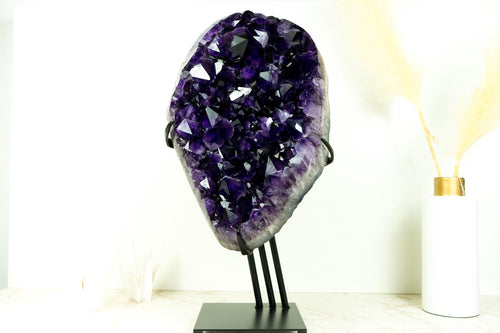
What Makes Amethyst Crystals Unique?
Amethyst is a purple variety of quartz. Its colour can range from light lavender to deep violet, and individual specimens may show several shades in the same formation. Crystal size, surface texture and the arrangement of points also affect the overall appearance. Geodes, Clusters and Rare Specimens can each display these natural variations in different ways.
Some Amethyst Crystals have closely packed points that create a textured surface. Others form inside hollow geodes, where crystals grow along the inner walls. At E2D Crystals & Minerals, certain specimens also contain minerals such as Calcite or Golden Goethite, adding contrast to the purple crystal formations.
At E2D Crystals & Minerals, the collection features a variety of natural forms, including:
-
Deep Purple Formations: Rich purple shades that stand out in a mineral display.
-
Crystal Clusters: Groups of crystal points growing together in one specimen.
-
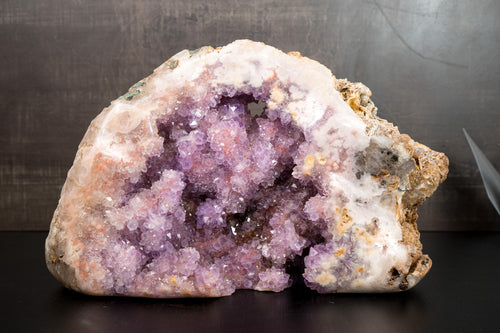
Geode Interiors: Hollow spaces lined with naturally formed crystals.
-
Druzy Surfaces: Small crystals that create a sparkling texture.
-
Mineral Inclusions: Additional minerals that create different colours, shapes and patterns.
How to Choose a Specimen for Your Collection
Choosing a crystal is partly about appearance and partly about practical details. A specimen that looks attractive in a product photograph may have different proportions or visual features when viewed from another angle. Take time to review the available product images and descriptions before making your decision. When comparing Geodes, Clusters and Rare Specimens, consider which natural formations appeal most to you. Enjoy free worldwide shipping on your order from E2D Crystals & Minerals.
Use these points to compare your options:
-
Colour: Decide whether you prefer lavender, medium purple or deep violet tones.
-
Crystal Formation: Look at the size, arrangement and density of the crystal points.
-
Shape: Consider whether a compact cluster, rounded geode or tall cathedral suits your display.
-
Inclusions: Some specimens feature Calcite, Golden Goethite or other minerals that create additional contrast.
-
Dimensions and Weight: Check the listed measurements and make sure your chosen location can support the piece.
-
Display Base: Consider whether the specimen can stand securely on its own or requires a suitable support.
Decorating Your Home with Natural Amethyst
Purple minerals can complement many interior styles. Their natural colours work with neutral walls, wooden furniture, glass cabinets and other mineral displays. The best placement depends on the specimen's size, shape and weight. A smaller cluster may suit a bookshelf or desk, while a larger geode can be displayed in a dedicated space. Keep the arrangement simple enough for the crystal's natural details to remain visible. Geodes, Clusters and Rare Specimens can all add natural colour and texture to a display. View the available collection and compare the different formations.
Here are a few display ideas:
-
Living Room: Place a suitable specimen on a stable console or display table.
-
Study or Office: A compact cluster can add natural texture to a desk or shelf.
-
Mineral Cabinet: Arrange different specimens together to compare colours, crystal shapes and inclusions.
-
Statement Display: Use a larger geode or cathedral as a focal point in a spacious area.
-
Collector's Shelf: Group specimens by size, colour or formation to make their differences easier to see.
Frequently Asked Questions
1. What Are Amethyst Crystals?
Amethyst Crystals are specimens of purple quartz that form in a range of natural shapes and sizes. They can appear as individual points, clusters or crystals lining the inside of a geode. Geodes, Clusters and Rare Specimens are different options for people interested in these natural formations.
2. What Is the Difference Between a Geode and a Cluster?
A geode has a hollow interior lined with crystals, while a cluster consists of multiple crystal points grouped together. Both forms can have different shades of purple, textures and natural patterns.
3. Are Amethyst Geodes Suitable for Home Decor?
Yes. Depending on their size and weight, they can be displayed on shelves, tables or dedicated stands. Check the product measurements and ensure the chosen surface provides stable support.
4. What Causes Different Shades of Purple?
Amethyst can vary from pale lavender to deep violet. Differences in colour are related to the mineral's composition and the conditions under which it formed. Individual specimens may show more than one shade.
5. How Should I Care for an Amethyst Specimen?
Handle the specimen carefully and place it on a stable surface. Use a soft, dry cloth or a gentle brush to remove dust when appropriate. Avoid harsh cleaning products and check care guidance before using water, especially on specimens with delicate formations or additional minerals.
6. Where Can I Find Amethyst Geodes and Clusters?
You can compare different sizes, shapes and natural formations in the Amethyst collection at E2D Crystals & Minerals. Review the product details and images to select a specimen that suits your collection or display space. The Geodes, Clusters and Rare Specimens collection offers different natural forms to compare.
Conclusion
When selecting Amethyst Crystals, compare the colour, structure, dimensions and details of each specimen. Think about whether you want a smaller piece for a collection or a larger formation for a dedicated display area. Amethyst Geodes, clusters and cathedral forms each offer a different way to appreciate the mineral's natural structure. Geodes, Clusters and Rare Specimens provide a useful way to compare the different shapes and features available. Explore the Amethyst collection at E2D Crystals & Minerals to compare different formations and find a specimen that suits your taste and display space. If you need help choosing the right crystal, please contact us for assistance.